FIRE & SMOKE
CONTROL THE FIRE. CONTROL THE COOK.
Great barbecue starts before the meat ever hits the smoker. Learning how to build and maintain a clean, steady fire gives you control over temperature, smoke, and ultimately the flavor of your food.
This guide breaks down the fundamentals of fire management - from airflow and fuel to wood selection and clean smoke - so you can understand what your smoker is telling you instead of constantly chasing the temperature gauge.
FIRE: STEADY & CONTROLLED
SMOKE: THIN & CLEAN
GOAL: CONSISTENT HEAT. CLEAN FLAVOR.
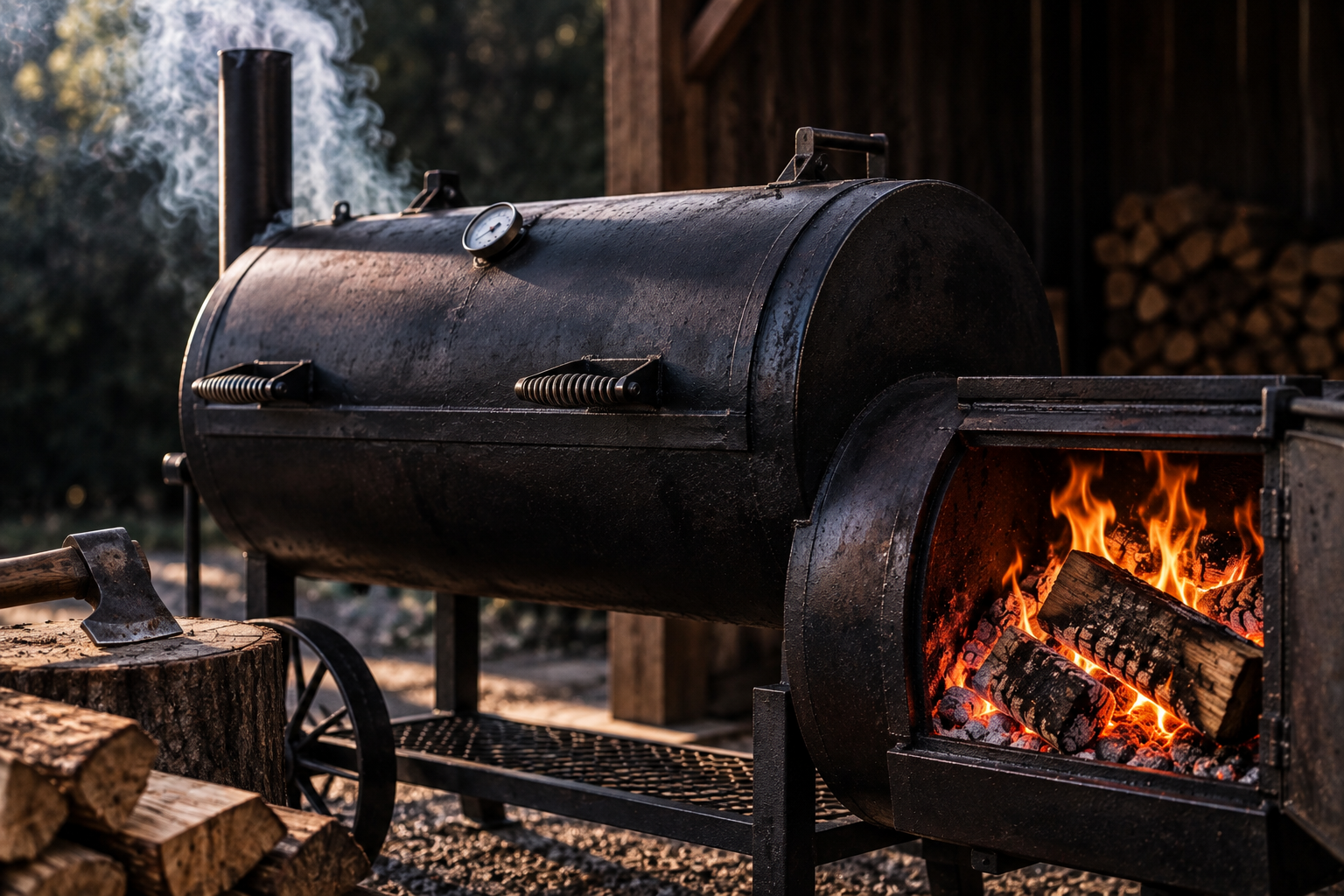
CLEAN SMOKE
LEARN TO READ THE SMOKE
Good barbecue doesn’t come from producing as much smoke as possible. It comes from maintaining a clean-burning fire that gives the meat a balanced smoke flavor without bitterness.
Look for thin, light smoke coming from the stack. It may appear slightly blue or can be so faint that you can barely see it. That’s a sign your fire is burning efficiently.
Thick white or gray smoke usually means the fire is struggling - often from poor airflow, wood that hasn’t fully ignited, or too much fuel being added at once. Let the fire breathe and allow new wood to catch before trying to restrict it.
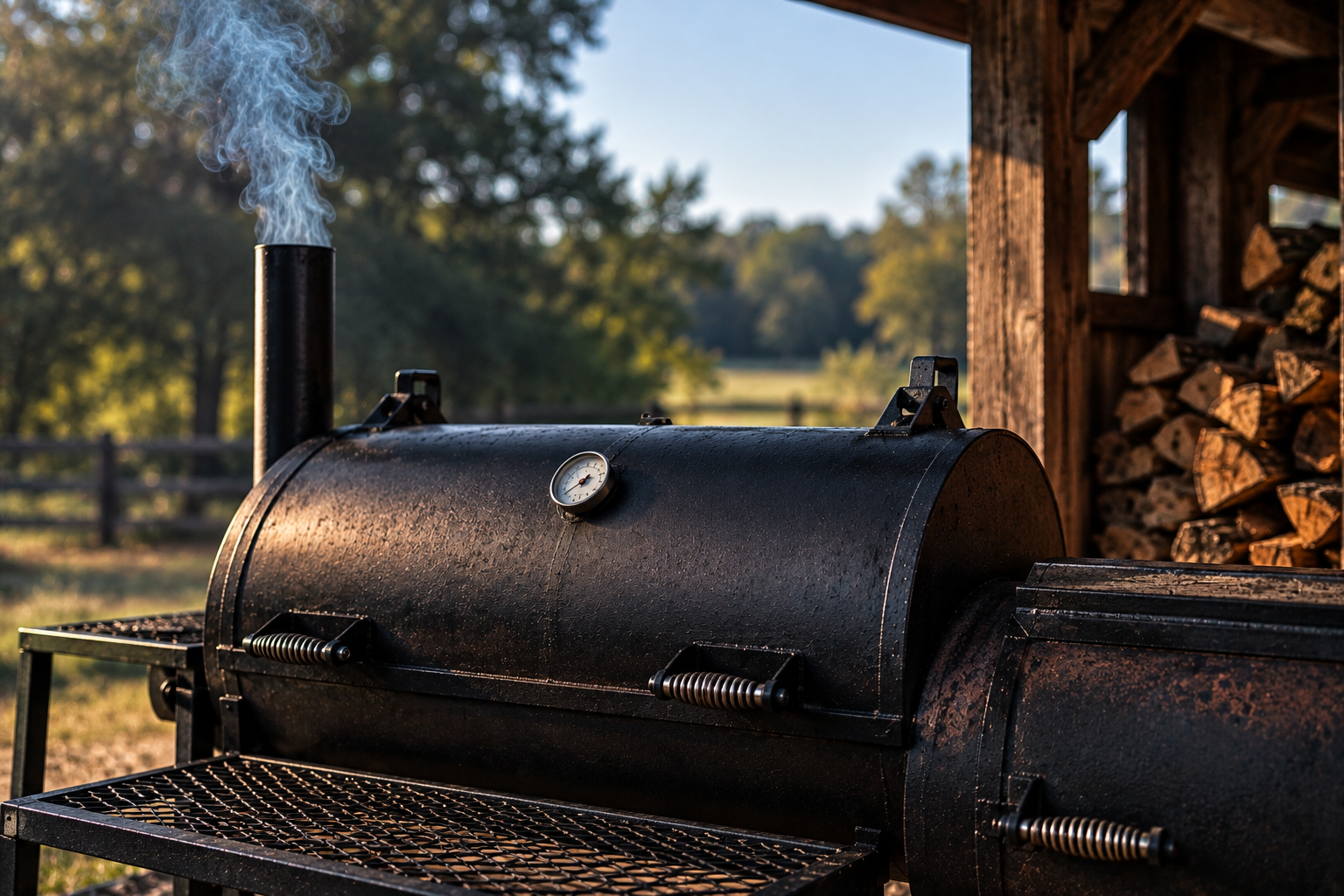
✓ THIN, LIGHT SMOKE IS THE GOAL
✓ AVOID THICK WHITE SMOKE
✓ GIVE THE FIRE ENOUGH AIR
✓ LET NEW WOOD BURN CLEAN
LET THE FIRE BREATHE
CONTROL THE AIRFLOW
A clean fire needs oxygen. On an offset smoker, airflow enters through the firebox, feeds the fire, then carries heat and smoke throughout the cooking chamber and out the stack.
Avoid choking the fire down just to lower the pit temperature. Restricting airflow too much can cause the wood to smolder, producing heavy smoke and bitter flavor.
Instead, keep the exhaust stack open and control the fire with the amount of fuel you add. Make small adjustments and give the smoker time to respond before changing anything again.
✓ KEEP THE EXHAUST OPEN
✓ DON’T STARVE THE FIRE OF OXYGEN
✓ CONTROL HEAT WITH FUEL
✓ MAKE SMALL ADJUSTMENTS
CHOOSE YOUR WOOD
MATCH THE WOOD TO THE COOK
The wood you burn affects both the strength and character of the smoke flavor. You don’t need a complicated mix of different woods - a good, properly seasoned hardwood and a clean-burning fire will take you a long way.
Oak is a great all-purpose choice because it burns steadily and produces a balanced smoke flavor. Hickory gives you a stronger, more traditional barbecue flavor, while fruit woods like apple and cherry tend to produce a milder smoke.
Whatever you choose, use dry, seasoned hardwood. Avoid green or damp wood, which can struggle to burn cleanly and produce heavier smoke.
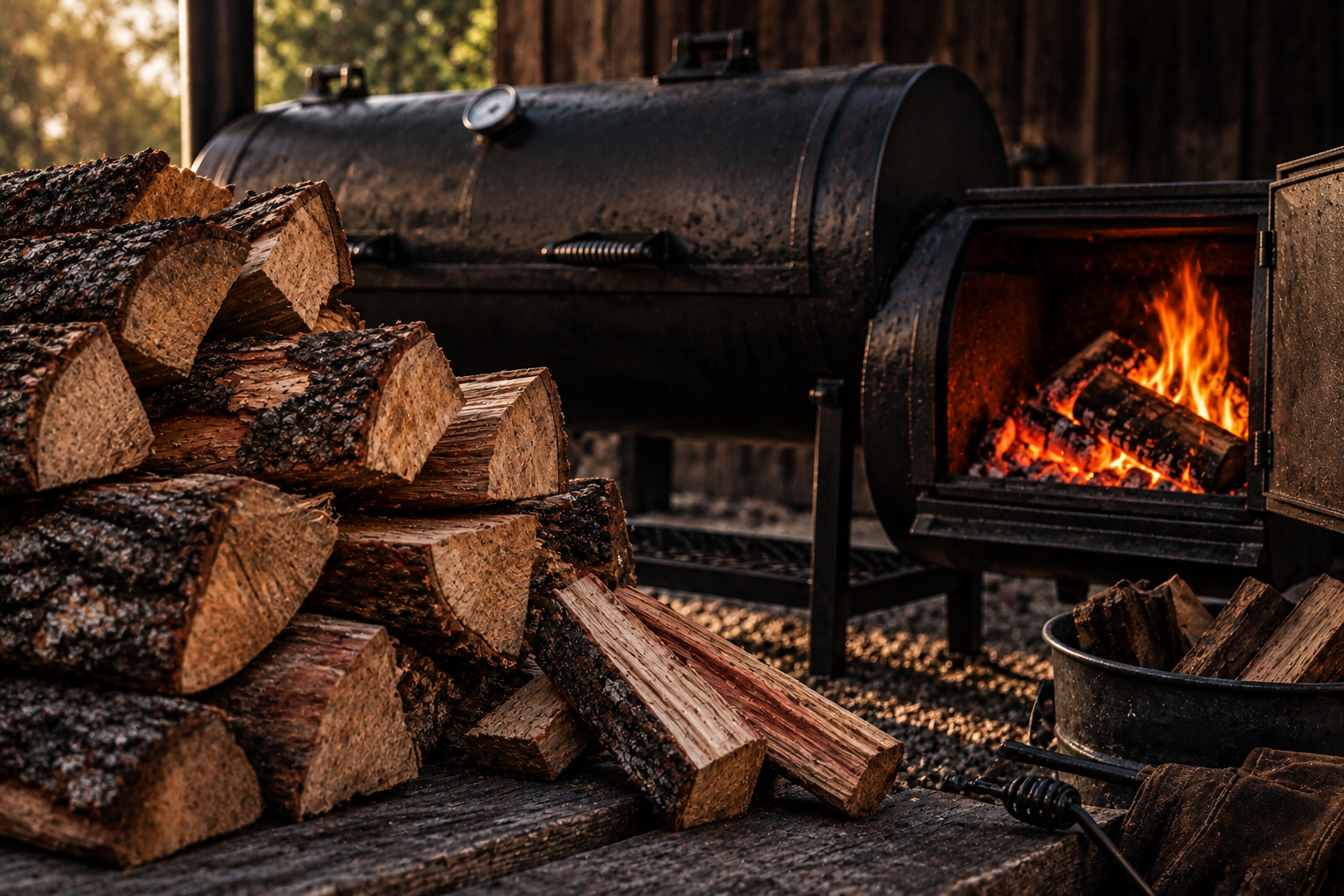
✓ OAK: BALANCED & VERSATILE
✓ HICKORY: STRONGER SMOKE FLAVOR
✓ APPLE & CHERRY: MILDER SMOKE
✓ USE DRY, SEASONED HARDWOOD
✓ NEVER USE TREATED OR PAINTED WOOD
CONTROL THE HEAT
BUILD A SMALL, HOT FIRE
You don’t need a huge fire to run an offset smoker. A small, clean-burning fire is easier to control and gives you steady heat without producing heavy smoke.
Start with a solid bed of hot coals, then add one split at a time as needed. Let each piece ignite and burn cleanly before adding more fuel.
If the temperature begins to fall, add another split before the fire gets too weak. If it starts climbing, resist the urge to choke off the airflow. Let the fire settle and adjust the amount or size of the wood you’re feeding it.
Over time, you’ll learn the rhythm of your smoker and how often it needs another split.
✓ START WITH A HOT COAL BED
✓ ADD WOOD AS NEEDED
✓ KEEP THE FIRE SMALL & CLEAN
✓ CONTROL HEAT WITH FUEL — NOT DIRTY SMOKE
✓ LEARN YOUR SMOKER’S RHYTHM
MANAGE THE TEMPERATURE
STOP CHASING THE GAUGE
You’re smoker doesn’t need to sit on one exact temperature for the entire cook. Small rises and falls are completely normal when cooking with a live fire.
If you’re targeting 250°F, seeing the pit move between roughly 225–275°F isn’t a reason to panic. Watch the overall trend instead of reacting to every small change.
When the temperature starts dropping steadily, it may be time to add another split. If it climbs after adding wood, give the fire time to settle before making another adjustment.
The goal isn’t a perfectly flat temperature line - it’s a clean, controlled fire that stays within a useful cooking range.
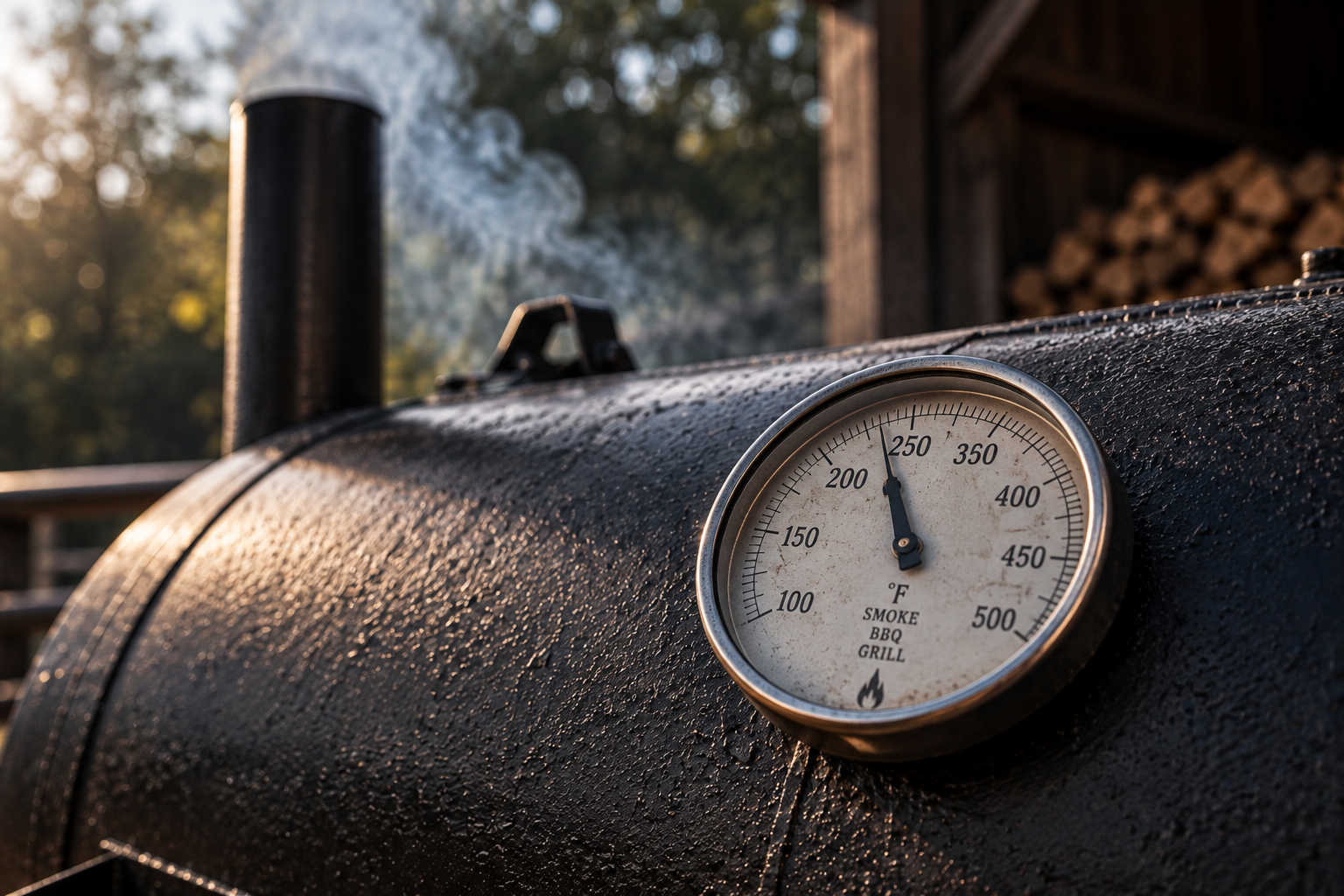
✓ EXPECT SMALL TEMPERATURE SWINGS
✓ WATCH THE TREND — NOT EVERY DEGREE
✓ DON’T CONSTANTLY ADJUST THE FIRE
✓ AIM FOR A STEADY COOKING RANGE
FEED THE FIRE
ADD WOOD BEFORE YOU NEED IT
Good fire management is about staying ahead of the fire instead of waiting until it nearly dies.
Watch your coal bed, flame, and pit temperature. As the previous split burns down and the temperature begins a gradual decline, add another piece of wood while you still have enough heat and coals to ignite it quickly.
Avoid piling several splits onto the fire at once. Adding too much wood can create a temperature spike and temporarily produce heavier smoke while the new fuel catches.
With practice, you’ll develop a rhythm - burn, add a split, let it catch, repeat.
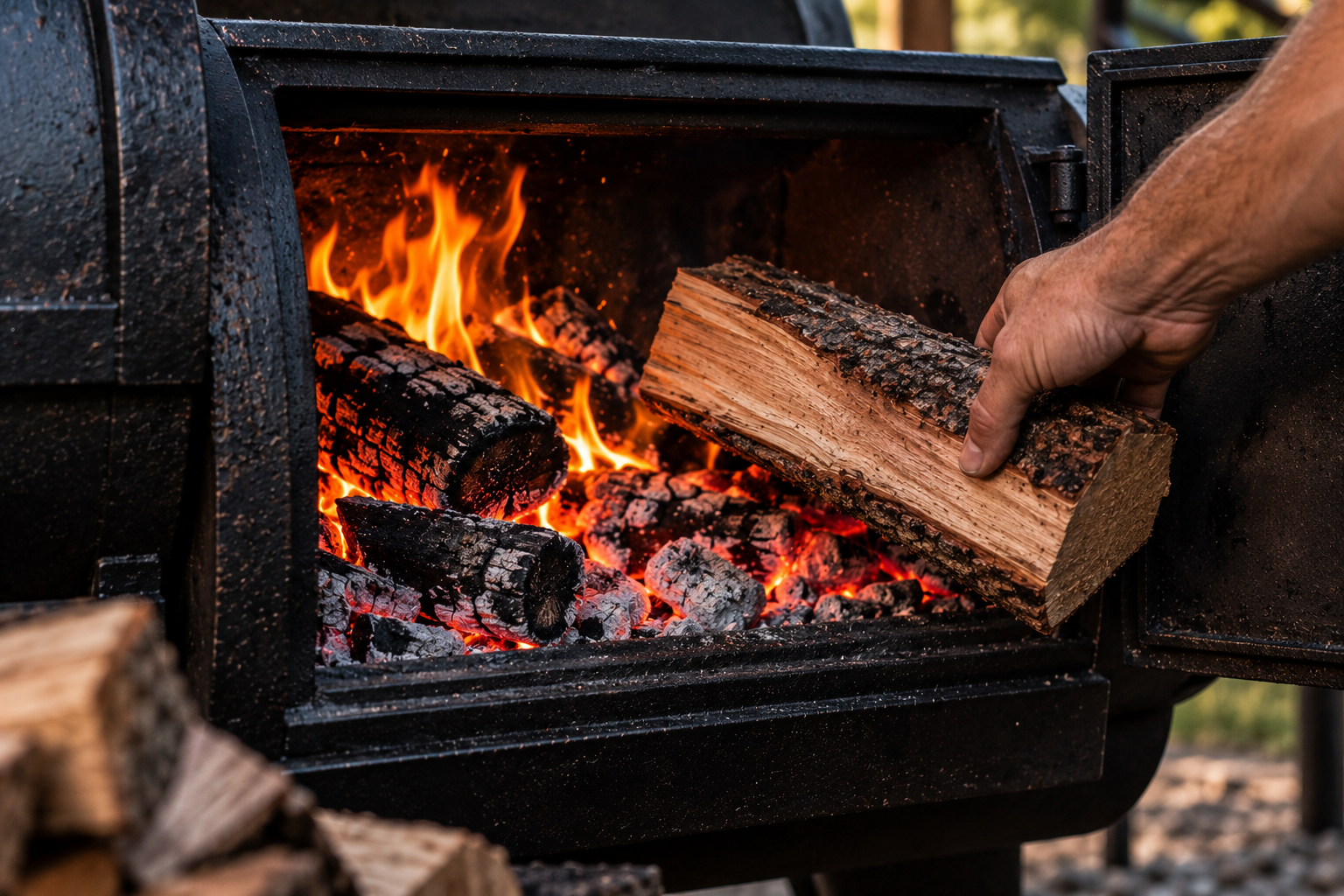
✓ WATCH THE COAL BED
✓ ADD WOOD BEFORE THE FIRE GETS WEAK
✓ ADD ONE SPLIT AT A TIME
✓ LET EACH SPLIT CATCH CLEANLY
✓ STAY AHEAD OF THE FIRE
BUILD A STRONG COAL BED
THE FOUNDATION OF YOUR FIRE
A good offset fire isn’t just burning logs. Underneath those flames should be a healthy bed of glowing coals that provides steady heat and helps each new split ignite cleanly.
Start your fire with charcoal or small pieces of dry hardwood and allow it to burn down until you have a solid coal bed before settling into the cook.
As the cook continues, protect that coal bed. Add your next split before the precious fire burns too far down. If you lose the coal bed completely, new wood will take longer to ignite and may smolder while the fire rebuilds.
Think of the coal bed as the engine of the fire - the wood you add keeps it running.
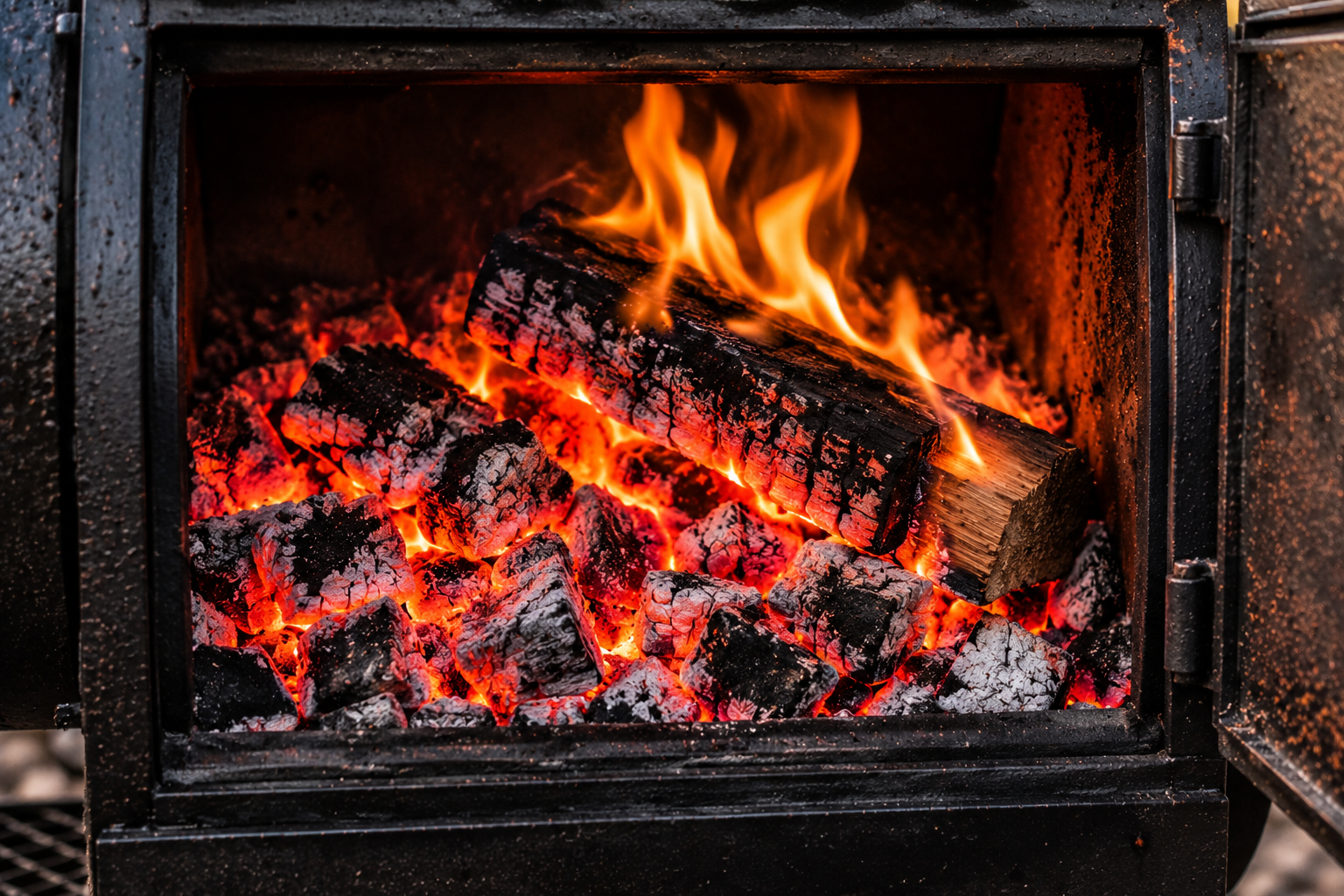
✓ BUILD A STRONG COAL BED FIRST
✓ KEEP GLOWING COALS UNDER THE FIRE
✓ DON’T LET THE FIRE BURN TOO FAR DOWN
✓ ADD NEW WOOD TO HOT COALS
✓ A STRONG COAL BED HELPS WOOD IGNITE CLEANLY
FIX THE FIRE
KNOW WHAT THE FIRE IS TELLING YOU
Even a well-managed fire will need correcting from time to time. Instead of immediately changing everything, look at the the fire is doing and make one adjustment at a time.
If the fire is smoldering and producing heavy smoke, it usually needs more oxygen or a stronger coal bed. Open the firebox and let the wood ignite cleanly.
If the pit temperature is falling, check the coal bed and add another split before the fire get too weak. If the temperature is running too hot, stop adding fuel and let the existing fire burn down rather than choking it with the vents.
The more you cook, the easier it becomes to recognize these signs before they turn into bigger problems.
✓ HEAVY SMOKE → GIVE THE FIRE AIR
✓ LOW TEMP → CHECK THE COAL BED
✓ HIGH TEMP → STOP ADDING FUEL
✓ CHANGE ONE THING AT A TIME
✓ DON’T PANIC OVER SMALL SWINGS
KNOW YOUR HOT SPOTS
An offset smoker won’t have the exact same temperature everywhere inside the cooking chamber. Heat enters from the firebox and moves across the smoker toward the exhaust, creating areas that may run hotter or cooler than others.
Learn where those areas are on your smoker. A grate-level thermometer can help you compare temperatures, but experience will eventually tell you where different foods cook best.
Don’t assume the temperature shown on the smoker’s built-in gauge is exactly what the meat is experiencing at grate level.
Once you understand your smoker’s heat pattern, you can use it to your advantage instead of fighting it.
EVERY SMOKER COOKS DIFFERENTLY
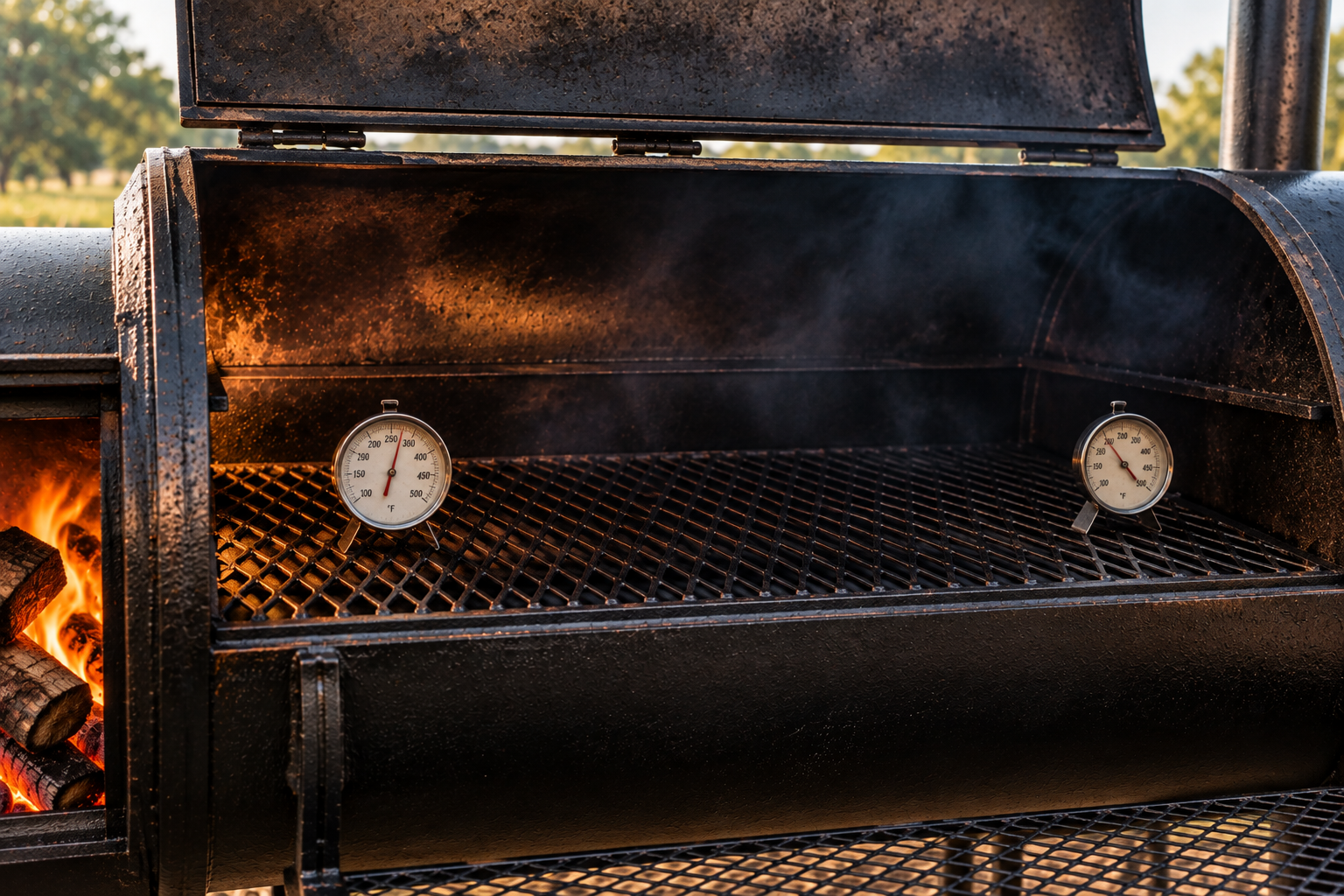
✓ LEARN YOUR SMOKER’S HOT SPOTS
✓ CHECK TEMPERATURE AT GRATE LEVEL
✓ DON’T RELY ONLY ON THE LID GAUGE
✓ USE HOT & COOLER ZONES TO YOUR ADVANTAGE
PLACE THE MEAT
Where you place the meat inside an offset smoker can affect how quickly and evenly it cooks.
The area closest to the firebox is usually hotter, so larger cuts can cook more aggressively there. Farther away from the fire, temperatures may be more moderate depending on the design of your smoker.
When cooking multiple pieces of meat, leave some space between them so heat and smoke can move freely through the chamber.
For longer cooks, watch how each piece is progressing. If one sone is cooking noticeably faster, rotate or reposition the meat rather than constantly changing the fire.
USE THE COOKING CHAMBER TO YOUR ADVANTAGE
✓ KNOW WHERE YOUR HOT ZONE IS
✓ LEAVE SPACE AROUND THE MEAT
✓ DON’T BLOCK AIRFLOW THROUGH THE CHAMBER
✓ ROTATE OR REPOSITION WHEN NEEDED
✓ LET THE SMOKER WORK WITH YOU
KEEP THE SMOKE MOVING
DON’T BLOCK THE FLOW
An offset smoker works by pulling hot air and smoke from the firebox, across the cooking chamber, and out through the exhaust.
Avoid overcrowding the cooking grate or placing large cuts where they completely block that path. You want enough space around the meat for heat and smoke to circulate freely.
Keep the exhaust open while you cook. A strong, clean draft helps the fire burn efficiently and prevents stale, heavy smoke from lingering around the meat.
Think of smoke as something that should move across the food - not collect around it.
✓ KEEP THE EXHAUST OPEN
✓ LEAVE SPACE AROUND THE MEAT
✓ DON’T BLOCK THE PATH OF HEAT & SMOKE
✓ KEEP CLEAN SMOKE MOVING
✓ GOOD AIRFLOW = A CLEANER FIRE
USE THE RIGHT TOOLS
KEEP IT SIMPLE
You don’t need a pile of expensive equipment to make great barbecue. A few reliable tools will make managing the fire, checking the temperatures, and handling food much easier.
A good instant-read thermometer helps you check doneness quickly, while a grate-level thermometer lets you see what the temperature is where the meat is actually cooking.
For the fire, keep a sturdy pair of heat-resistant gloves and a fire poker or small shovel nearby. Long-handled tongs are useful for moving food without reaching over a hot smoker.
Buy tools that solve a problem - not tools just because they look good sitting next to the smoker.
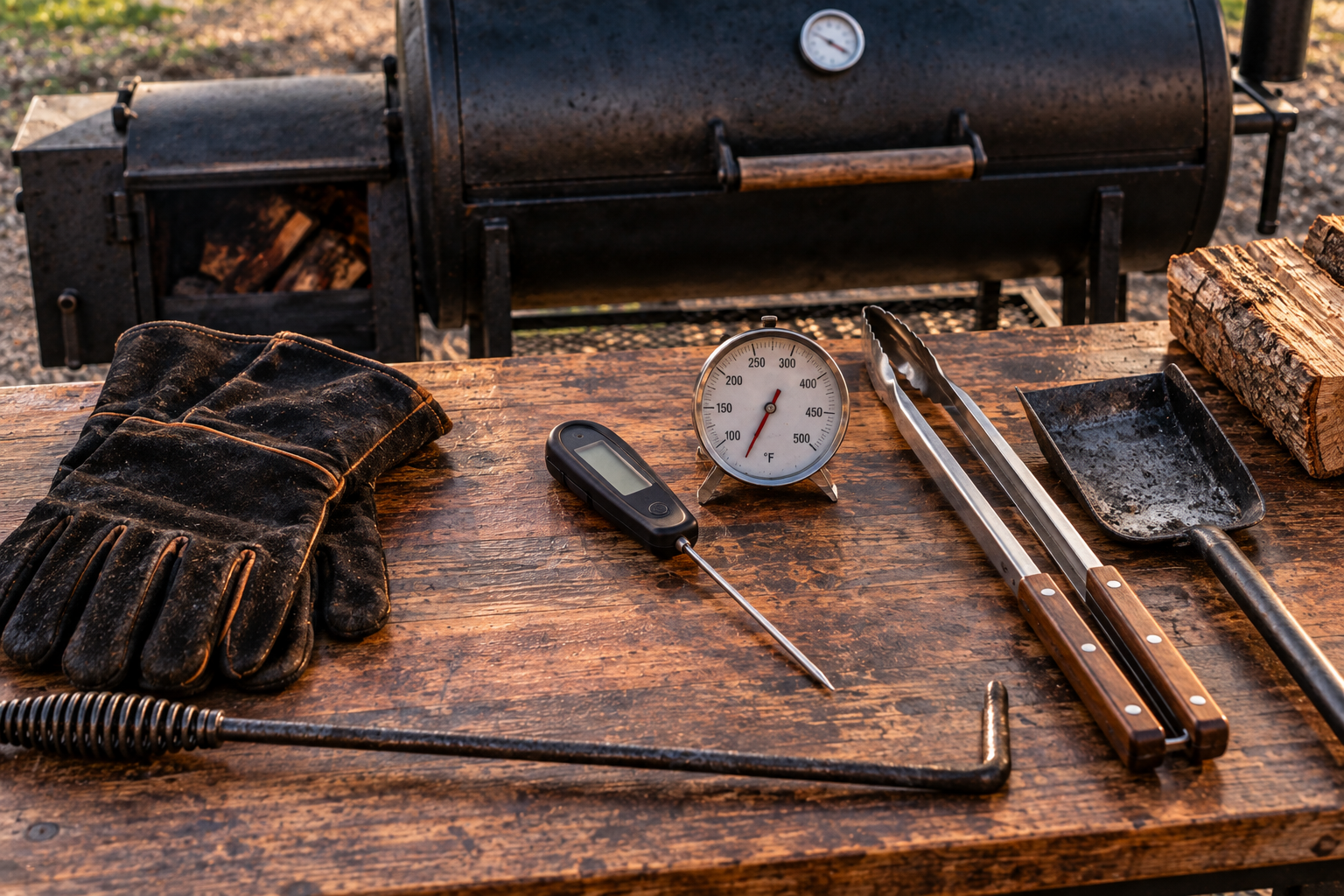
✓ INSTANT-READ THERMOMETER
✓ GRATE-LEVEL THERMOMETER
✓ HEAT-RESISTANT GLOVES
✓ LONG-HANDLED TONGS
✓ FIRE POKER OR SMALL SHOVEL
TRUST THE PROCESS
LEARN YOUR FIRE
Fire management isn’t something you master is one cook. Every smoker drafts differently, every piece of wood burns a little differently, and changing weather can affect how your fire behaves.
Pay attention to how your smoker responds when you add a split, adjust airflow, or let the coal bed burn down. Over time, you’ll stop reacting to every temperature change and start anticipating what the fire needs.
The goal is to develop a rhythm: build a clean fire, keep it breathing, feed it when necessary, and make small adjustments when something changes.
Eventually, managing the fire becomes less about watching numbers and more about understanding what you see, smell, and feel.
✓ LEARN HOW YOUR SMOKER RESPONDS
✓ MAKE SMALL ADJUSTMENTS
✓ DON’T CHASE PERFECT TEMPERATURES
✓ WATCH THE FIRE — NOT JUST THE GAUGE
✓ EXPERIENCE BUILDS CONSISTENCY
THE SMOKE METHOD
MASTER THE FIRE
Great barbecue starts with understanding your fire. Learn to control the heat, read the smoke, manage airflow, and make small adjustments instead of chasing perfect numbers. The more fires you build, the more instinctive it becomes. Control the fire, and you control the cook.