PORK BUTT
BUILD THE BARK. PULL IT APART.
Pork butt is forgiving, flavorful, and one of the best cuts for learning how to manage a long cook. From trimming and seasoning to building bark, wrapping, resting, and pulling, this guide walks you through the complete process.
You’ll learn how to judge doneness by feel - not just temperature - so you can produce tender, juicy pulled pork with rich smoke flavor and bark in every bite.
COOK TEMP: 225–275°F
WRAP: OPTIONAL - ONCE BARK IS SET
FINISH: PROBE TENDER, USUALLY AROUND 195–205°F
CHOOSE YOUR PORK BUTT
START WITH THE RIGHT CUT
Look for a bone-in pork butt with good marbling and an even shape. The intramuscular fat will slowly render during the cook, helping the pork stay juicy and giving you the rich texture you want for pulled pork.
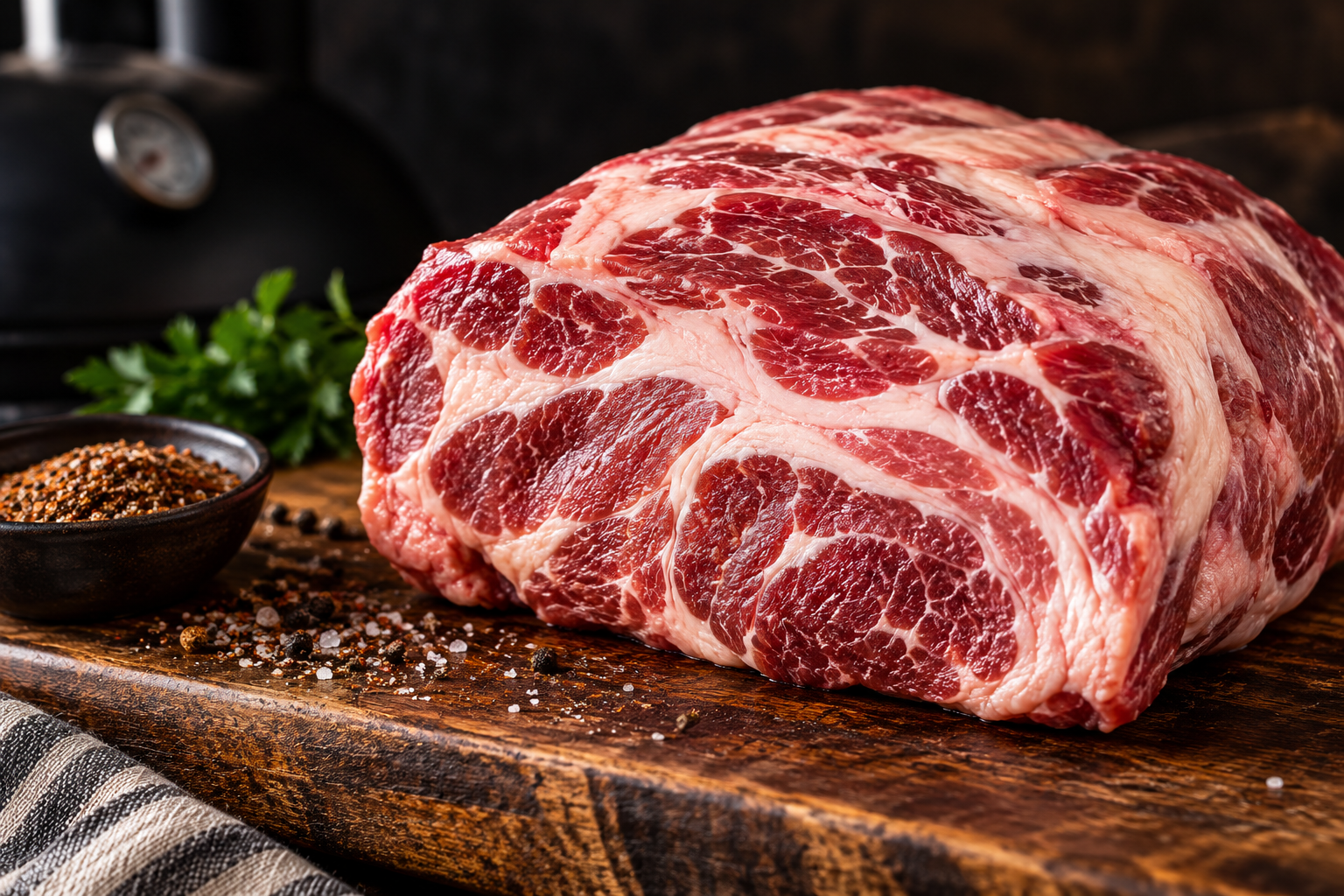
✓ CHOOSE BONE-IN
✓ LOOK FOR GOOD MARBLING
✓ PICK AN EVENLY SHAPED CUT
✓ AVOID EXCESSIVE LOOSE FAT
TRIM THE PORK BUTT
TRIM FOR BETTER BARK
Remove any loose pieces of meat or fat that may burn during the cook. Trim down any thick, hard areas of surface fat, but don’t go overboard - pork butt has plenty of internal fat to keep it moist.
The goal is a clean, even shape with plenty of exposed meat for your seasoning and smoke.
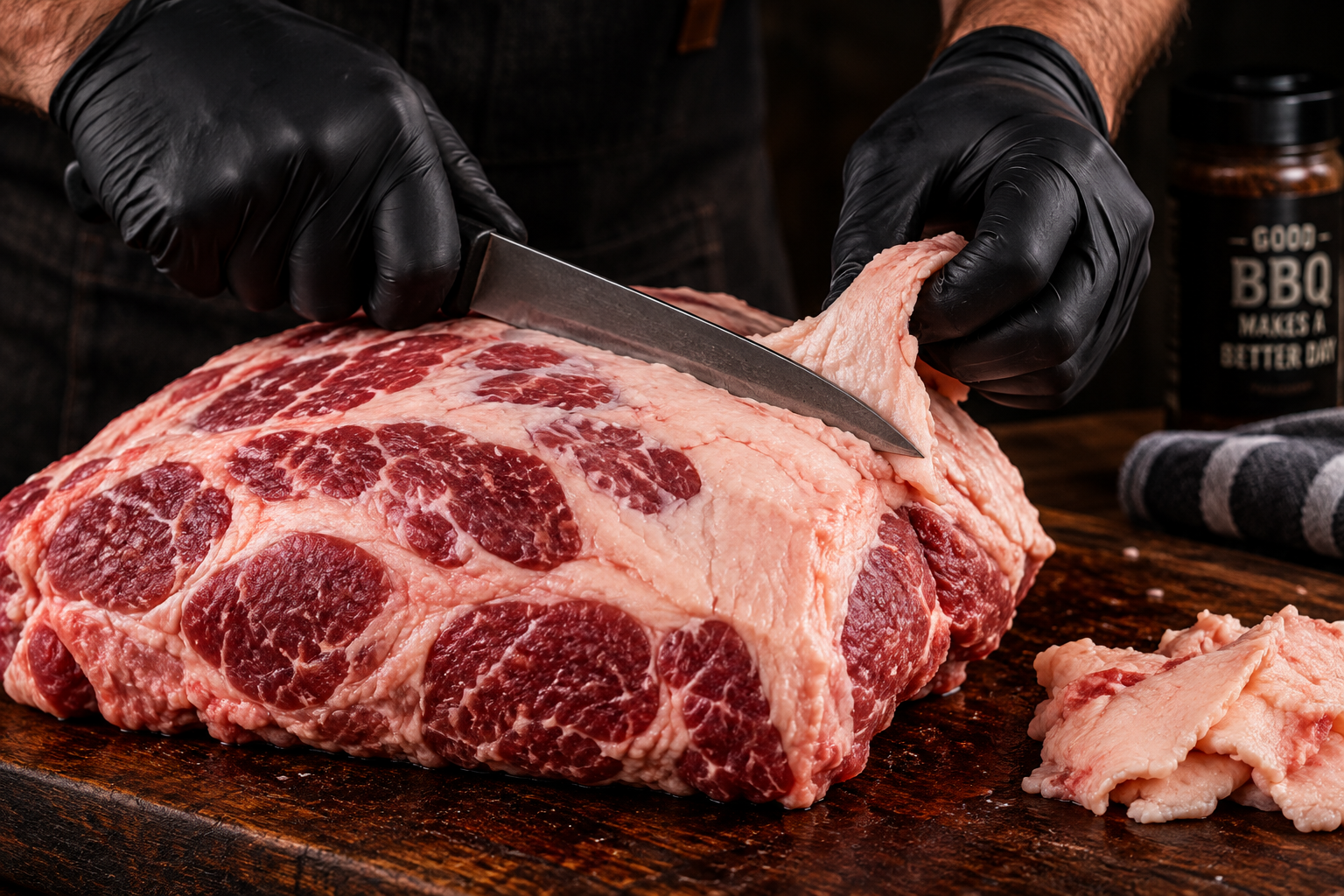
✓ REMOVE LOOSE PIECES
✓ TRIM HARD, EXCESS FAT
✓ LEAVE SOME SURFACE FAT
✓ DON’T OVER-TRIM
SEASON THE PORK BUTT
BUILD A FLAVORFUL BARK
Start with a light binder if you want - mustard or hot sauce works well, but it isn’t required.
Coat the pork butt generously on all sides with your seasoning. Make sure you work the rub into the edges, folds, and exposed meat.
Don’t be afraid of a heavy coating. Pork butt is a large cut, and that seasoning will help create the dark, flavorful bark you want during the cook.
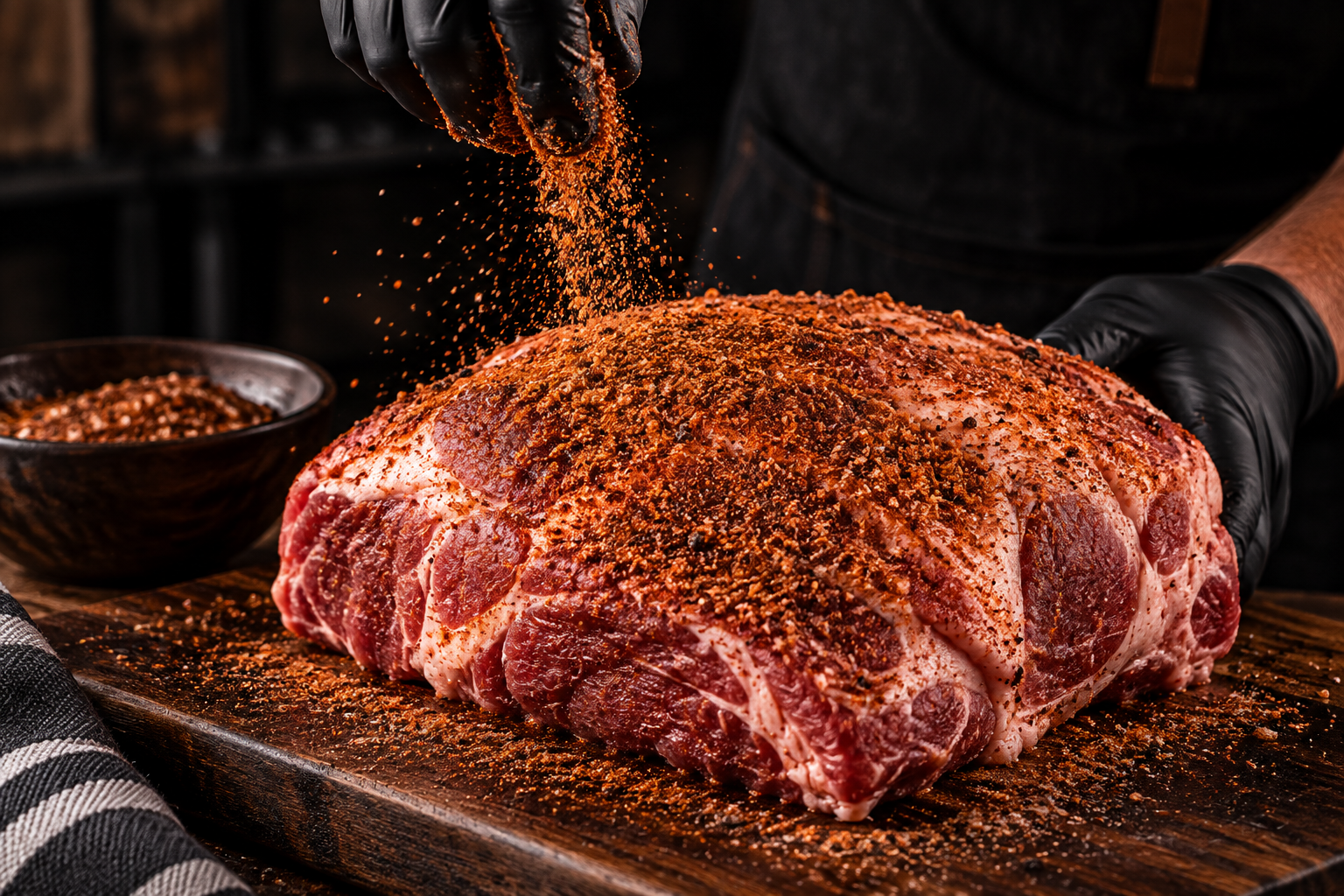
✓ BINDER: OPTIONAL
✓ SEASON ALL SIDES
✓ COAT GENEROUSLY
SET THE FIRE
LOW AND SLOW
Set your smoker to 225–275°F and let the temperature stabilize before the pork goes on.
Use clean-burning fire with thin, almost invisible smoke. Heavy white smoke can leave the pork tasting bitter.
Pork butt can handle stronger smoke flavors. Hickory and oak are great choices, while apple and cherry will give you a slightly milder, sweeter smoke.
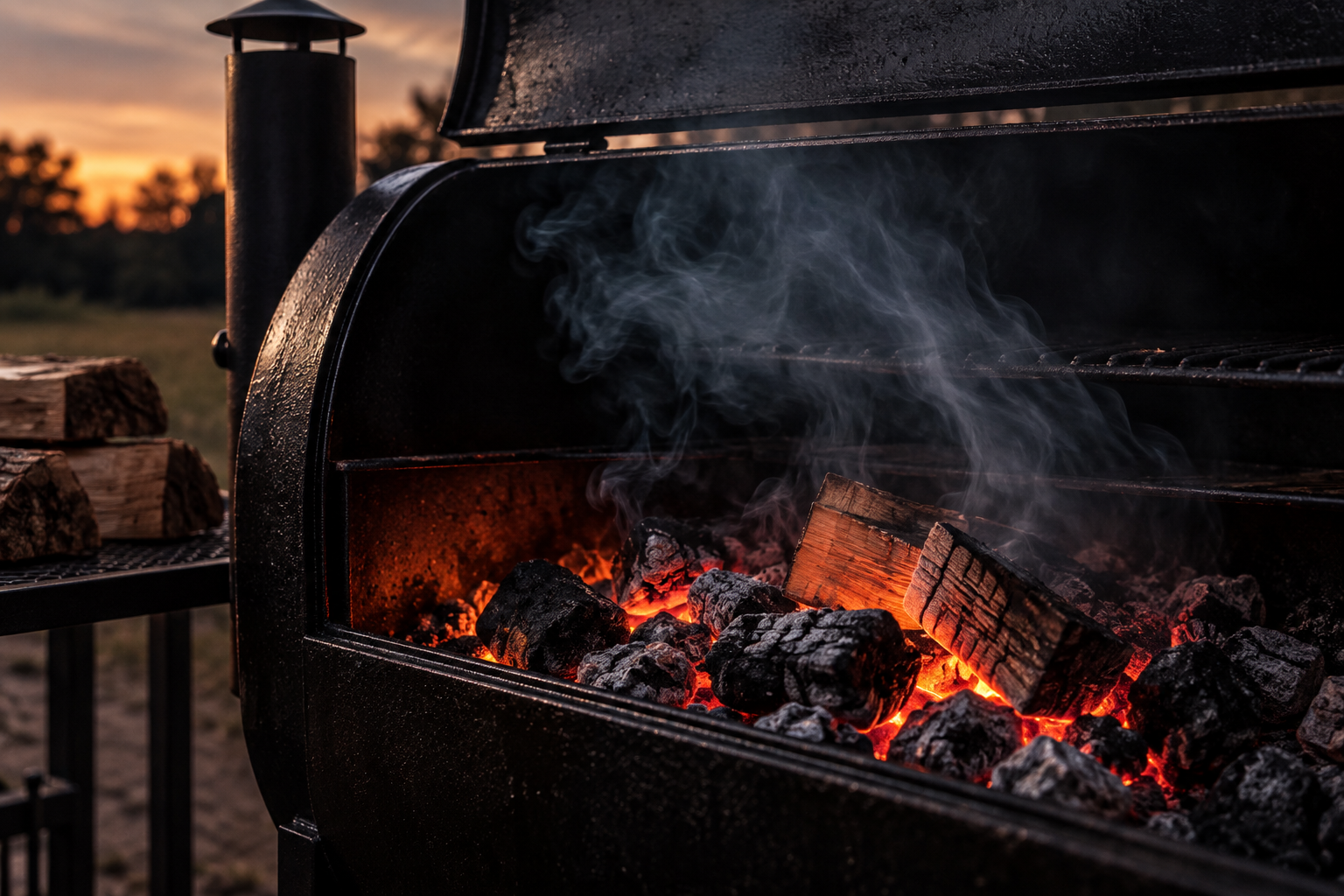
✓ PIT TEMP: 225–275°F
✓ SMOKE: THIN & CLEAN
✓ WOOD: HICKORY, OAK, APPLE OR CHERRY
THE COOK
LET THE SMOKE DO THE WORK
Place the pork butt on the smoker and let it cook undisturbed while the bark begins to develop.
Keep the pit between 225–275°F and focus on maintaining a clean, steady fire. Avoid constantly opening the smoker - every time you lift the lid, you lose heat and interrupt the cooking environment.
During the first several hours, the outside will gradually darken as the seasoning, smoke, and rendered fat come together to form the bark.
Don’t cook by the clock. Watch the bark and let the pork tell you when it’s ready for the next step.
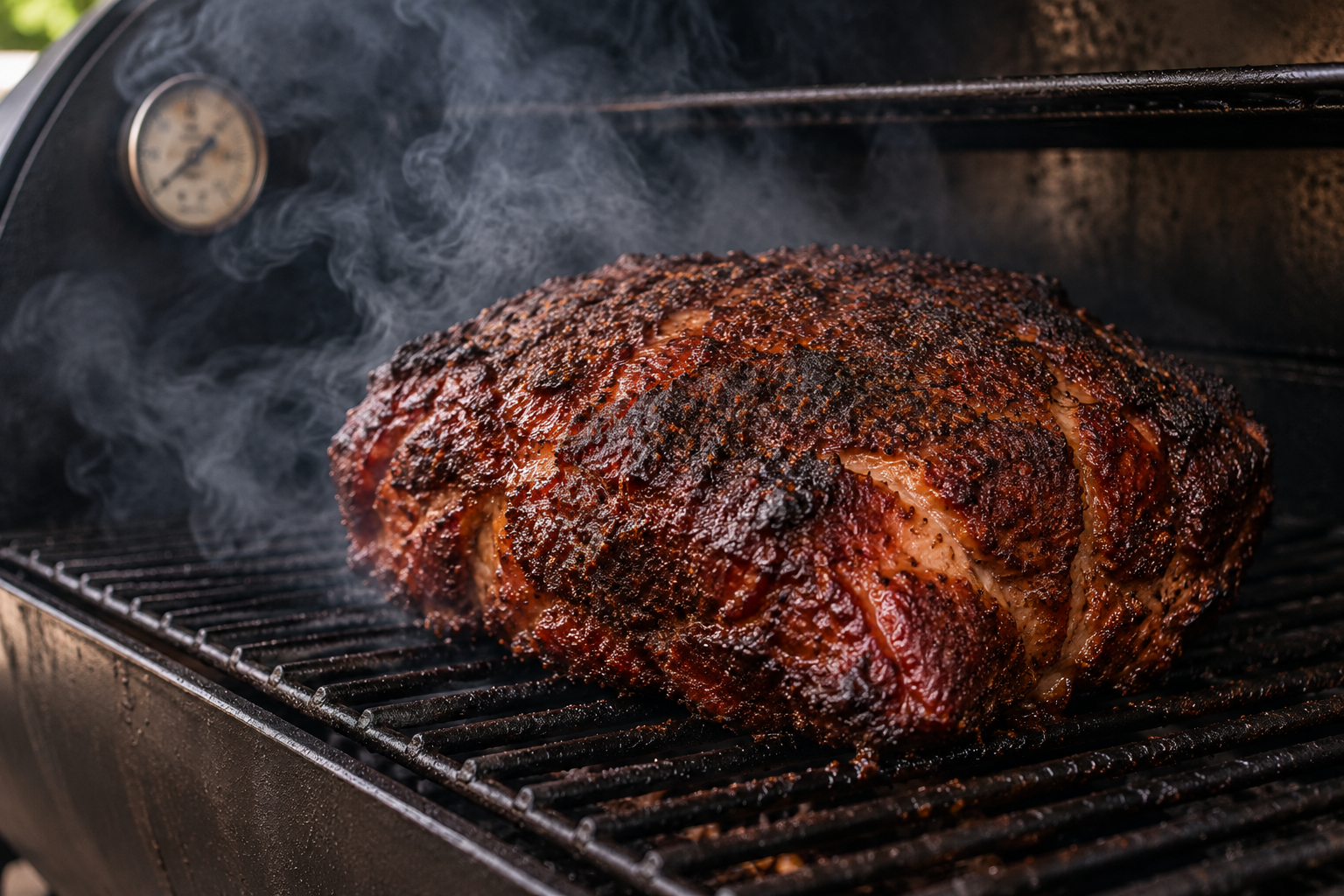
✓ PIT TEMP: 225–275°F
✓ KEEP THE LID CLOSED
✓ WATCH THE BARK — NOT THE CLOCK
WATCH THE BARK
KNOW WHEN IT’S SET
As the pork cooks, the bark will darken and become firm. Don’t rush this stage just because the internal temperature reaches a certain number.
The bark is ready when the seasoning no longer looks wet and doesn’t easily rub off when lightly touched. You’re looking for a deep mahogany to dark brown exterior with a dry, textures surface.
Once the bark is set, you can decide whether to wrap the pork butt or leave it unwrapped and continue building bark.
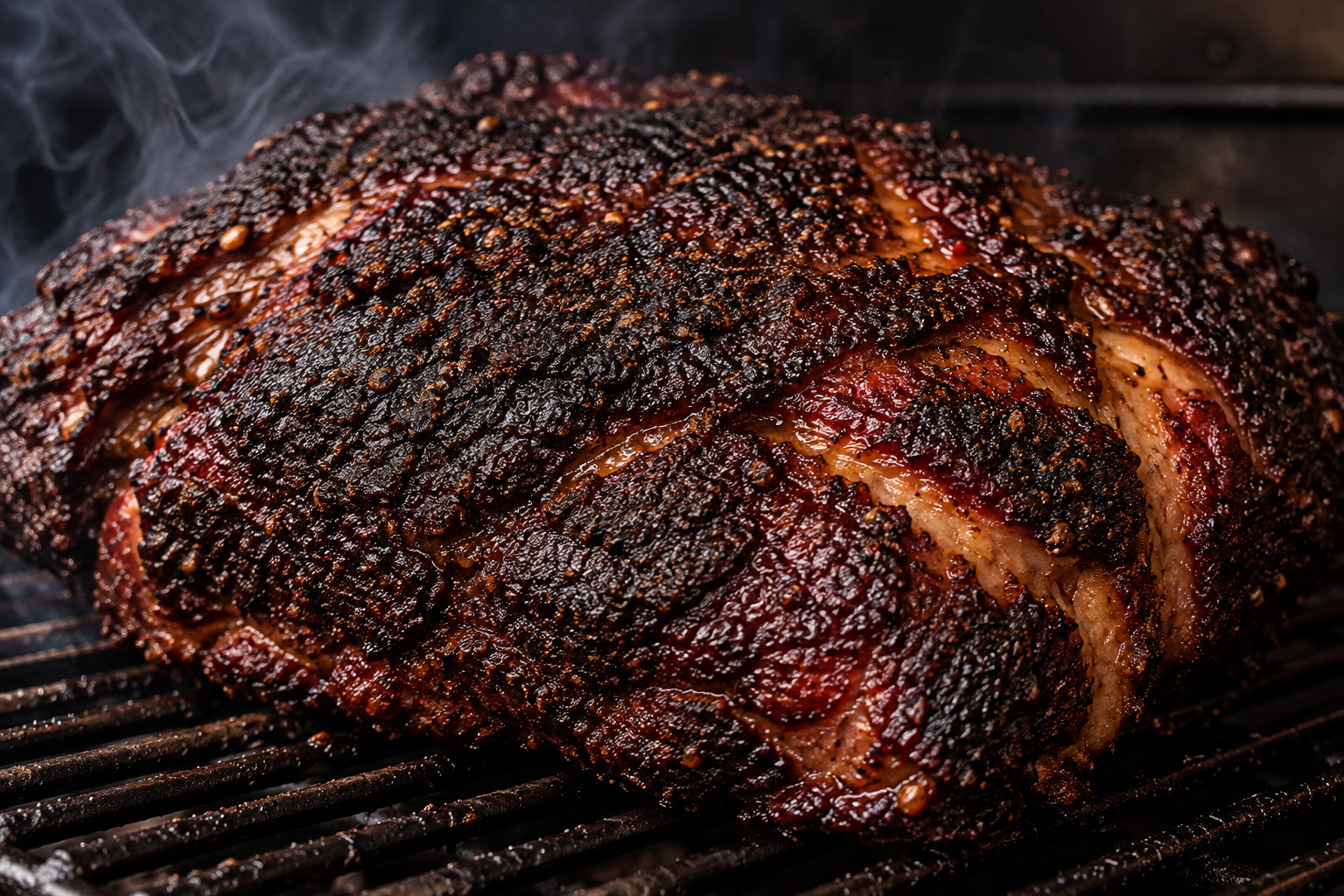
✓ LOOK FOR DARK, FIRM BARK
✓ SEASONING SHOULDN’T RUB OFF
✓ DON’T WRAP UNTIL THE BARK IS SET
WRAP THE PORK BUTT
PROTECT THE BARK. PUSH THROUGH THE STALL.
Once the bark is dark, firm, and set, you can wrap the pork butt to help it cook through the stall and retain moisture.
Foil creates a tighter seal and traps more moisture, helping the pork cook faster - but it can soften the bark.
Butcher paper breathes more than foil, helping preserve a firmer bark while still protecting the meat during the rest of the cook.
Wrapping is optional. If you want the strongest bark possible and have plenty of time, you can leave it unwrapped.
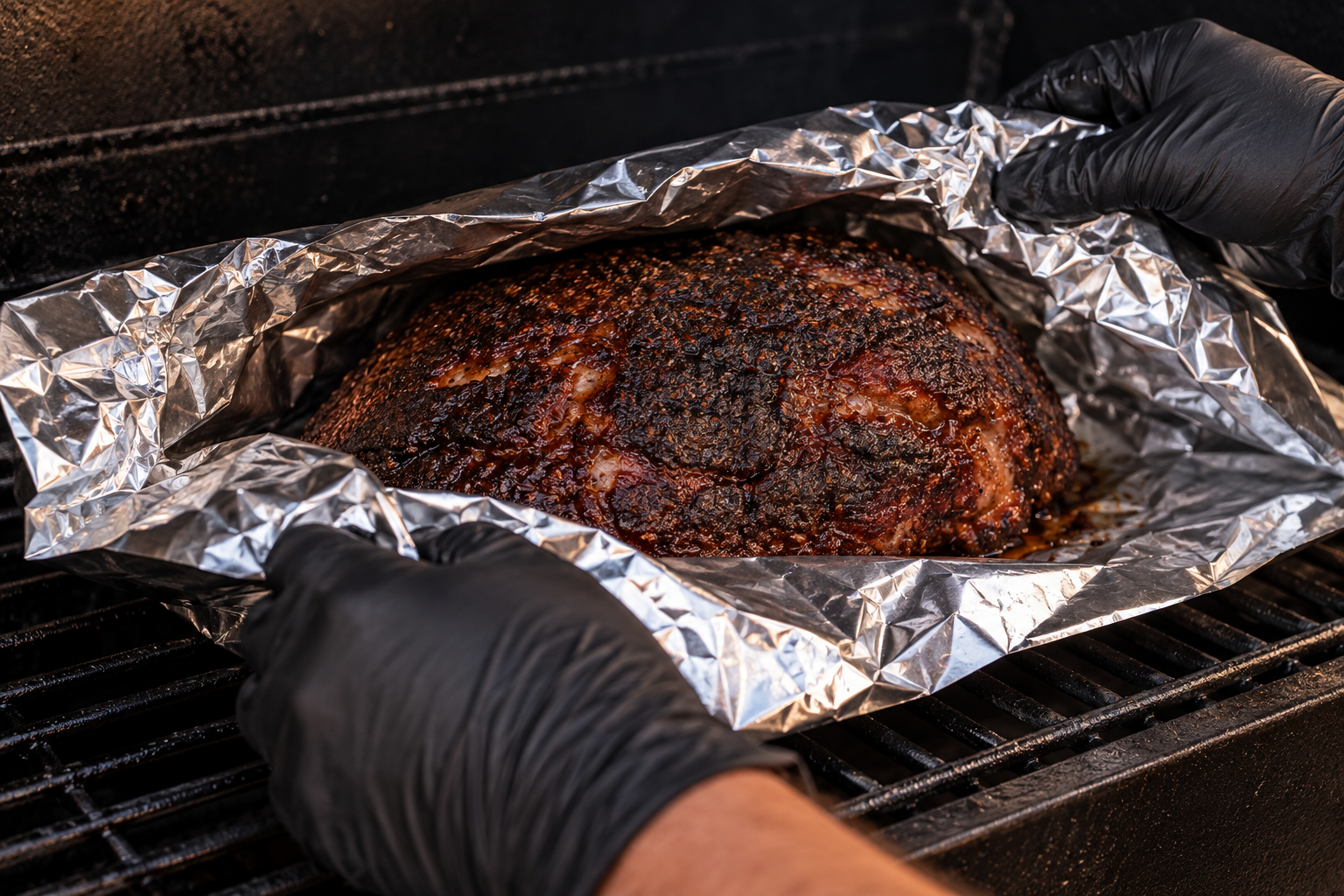
FOIL
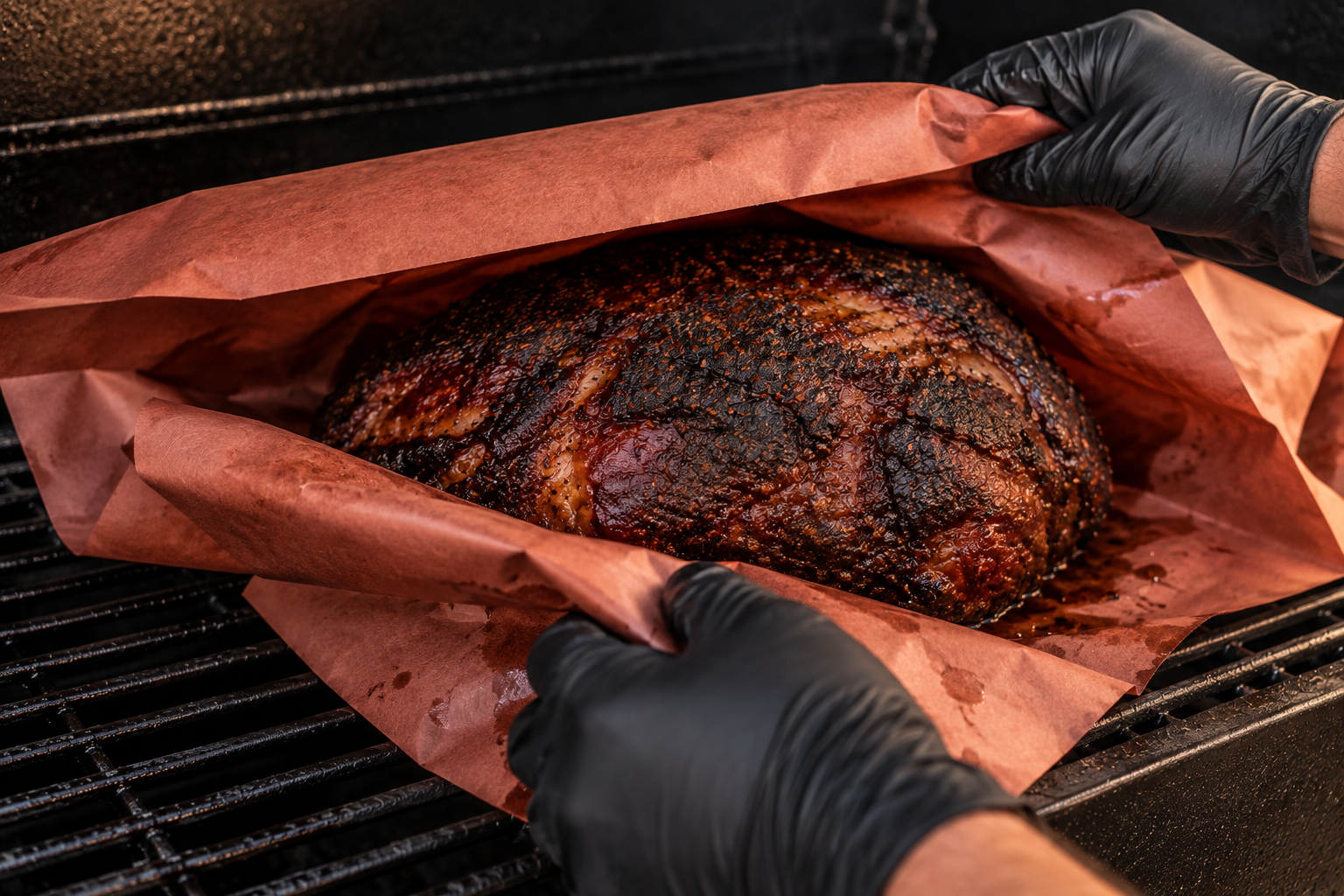
BUTCHER PAPER
✓ WRAP ONLY AFTER THE BARK IS SET
✓ FOIL = FASTER + MORE MOISTURE
✓ BUTCHER PAPER = FIRMER BARK
✓ WRAPPING IS OPTIONAL
COOK UNTIL TENDER
DON’T COOK BY TEMPERATURE ALONE
Continue cooking the pork butt until it reaches roughly 195–205°F internal temperature, then start checking for tenderness.
Insert a temperature probe into several areas of the meat, avoiding the bone. When it’s ready, the probe should slide in with very little resistance - almost like pushing into softened butter.
Every pork butt finishes differently, so don’t pull it just because the thermometer hits a certain number. Tenderness is the real test.
✓ START CHECKING: 195–205°F
✓ PROBE SHOULD SLIDE IN WITH LITTLE RESISTANCE
✓ TENDERNESS — NOT TEMPERATURE — IS THE FINAL TEST
REST THE PORK BUTT
LET THE MEAT RELAX
Once the pork butt is probe tender, remove it from the smoker and let it rest before pulling.
Keep it wrapped and allow the meat to rest for at least 30-60 minutes. During this time, the juices redistribute throughout the pork and the meat begins to relax.
Don’t rush this step. Pulling the pork immediately can cause more moisture to escape and make the meat harder to handle.
For a longer hold, keep the wrapped pork warm in an insulated cooler or low temperature holding setup until you’re ready to serve.
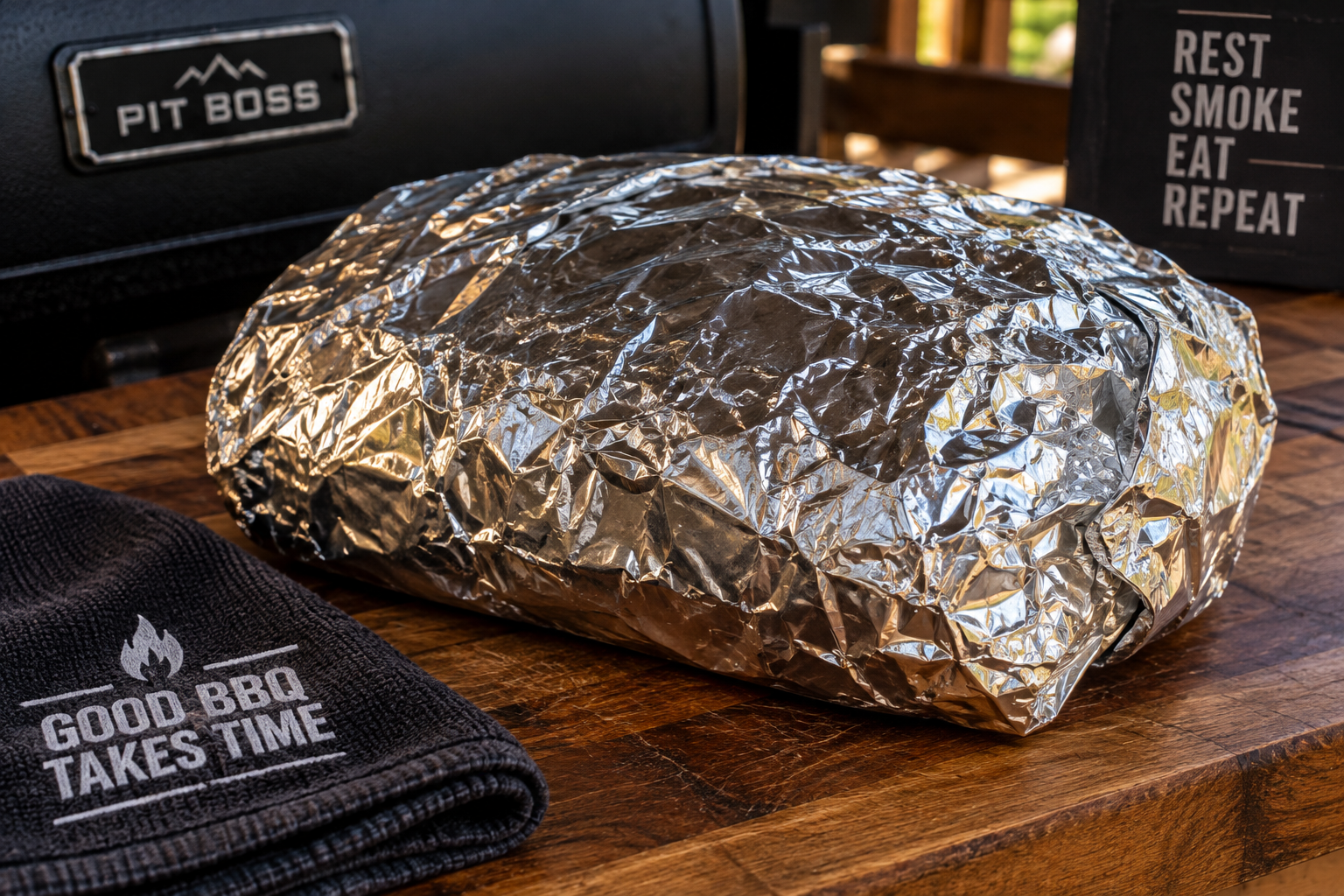
✓ REST AT LEAST 30–60 MINUTES
✓ KEEP IT WRAPPED
✓ REST BEFORE PULLING
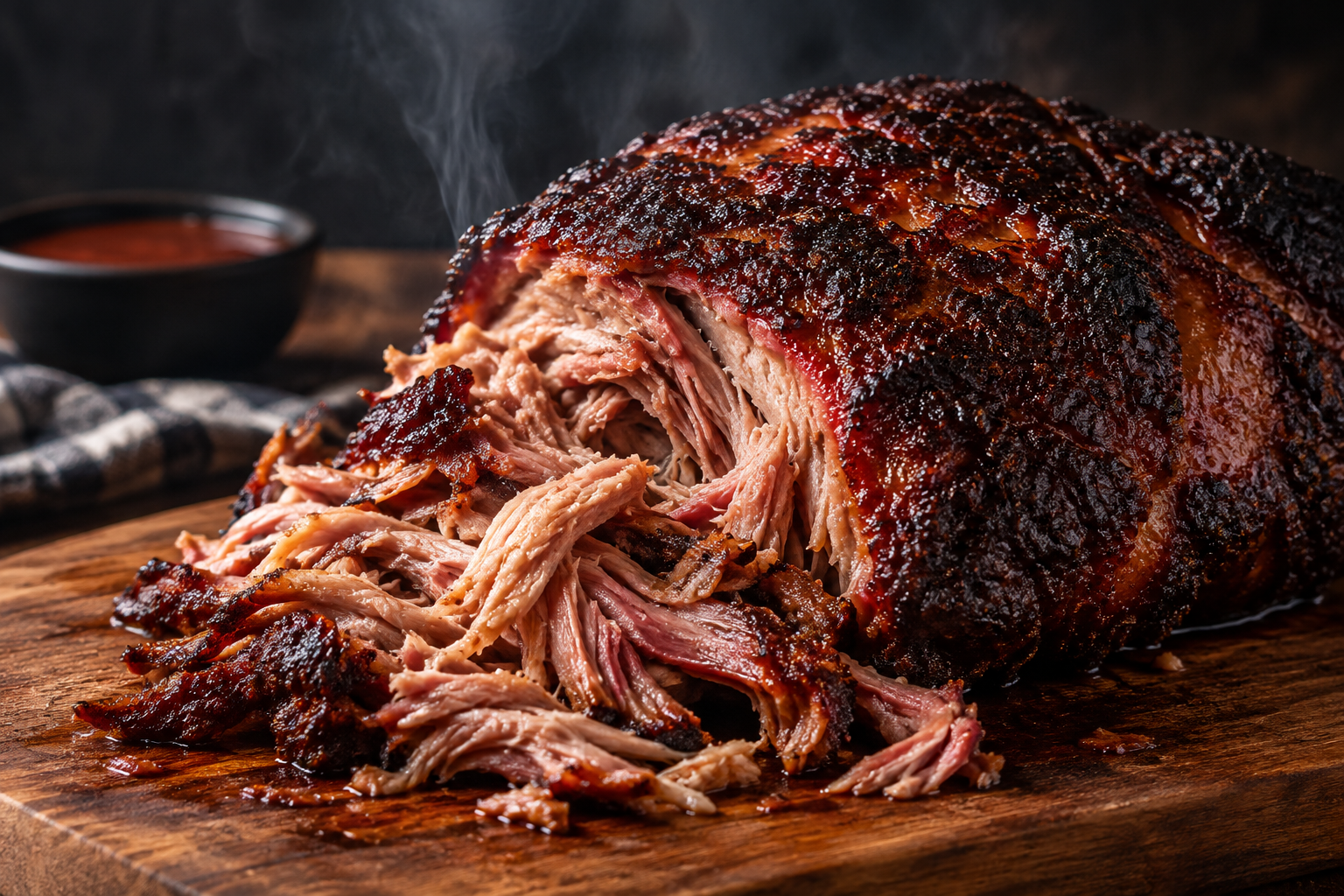
PULL THE PORK
PULL IT APART
After the pork butt has rested, carefully unwrap it and save any juices collected in the foil.
Remove the shoulder bone, if the pork is properly cooked, it should pull out cleanly with very little resistance.
Using gloved hands or meat claws, pull the pork into bite-sized pieces. Don’t shred it too finely. Leave a mixture of larger pieces, tender strands, and bark so every bite has texture.
Mix the dark bark throughout the pulled pork instead of leaving it all on top. Add some of the reserved juices back into the meat for extra moisture and flavor.
Taste before serving and add a light sprinkle of seasoning or sauce only if it needs it.
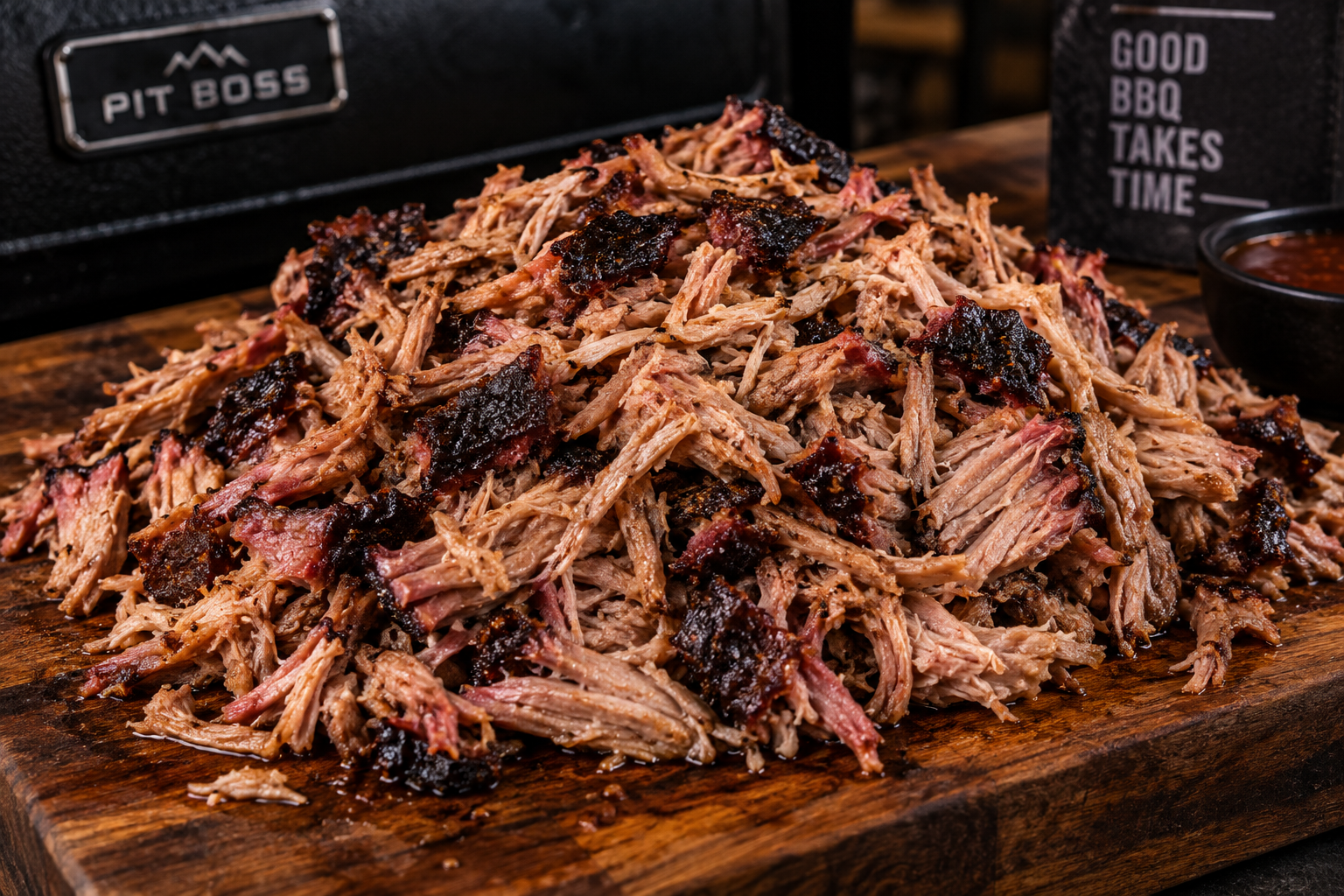
✓ BONE SHOULD PULL OUT CLEAN
✓ MIX THE BARK THROUGHOUT
✓ ADD RESERVED JUICES BACK
✓ DON’T OVER-SHRED
THE SMOKE METHOD
YOU KNOW WHEN IT’S READY
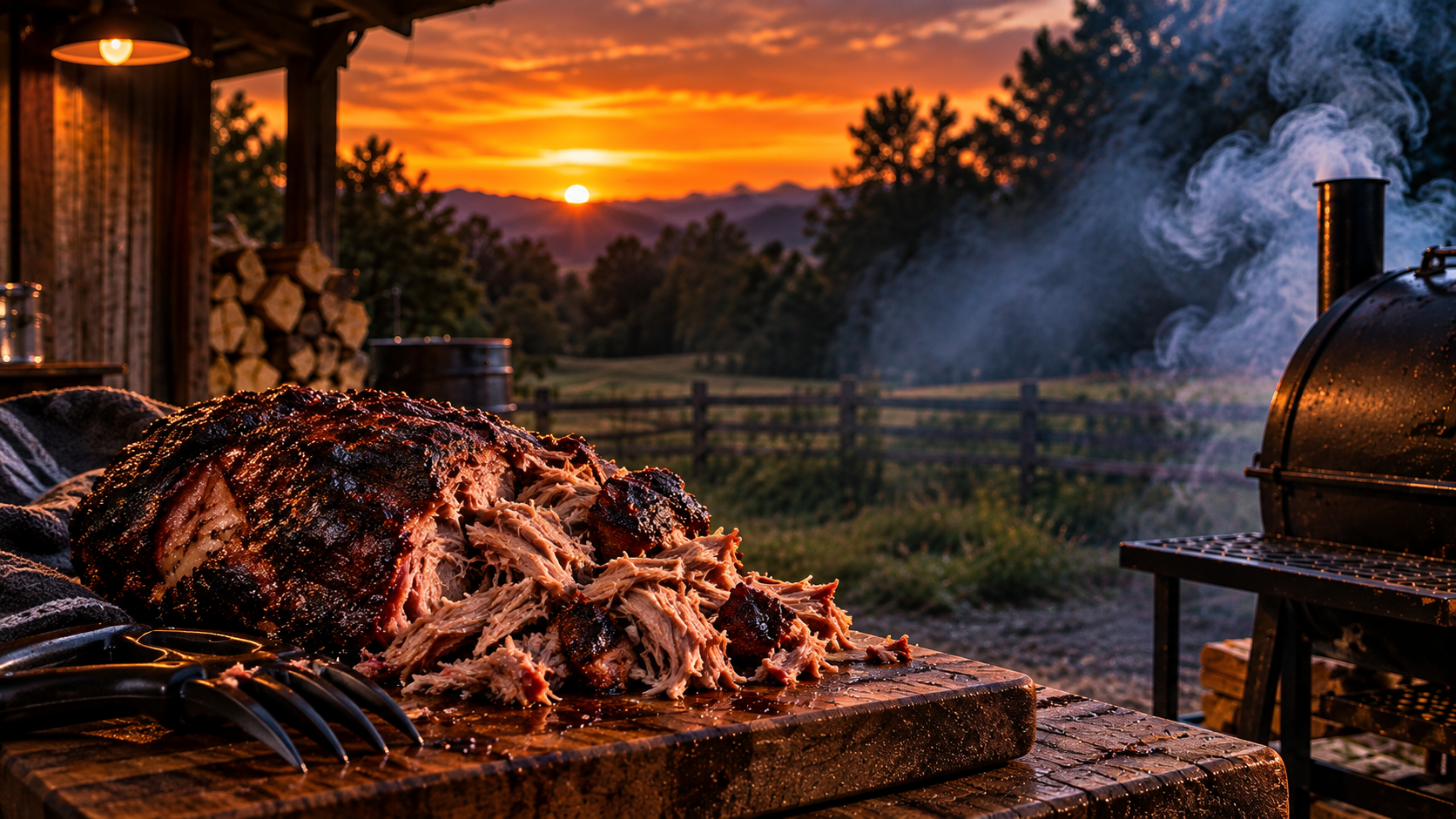
Pile high, serve it hot, and enjoy the results. You just made pulled pork from start to finish.